Formula 1 Heads to Africa
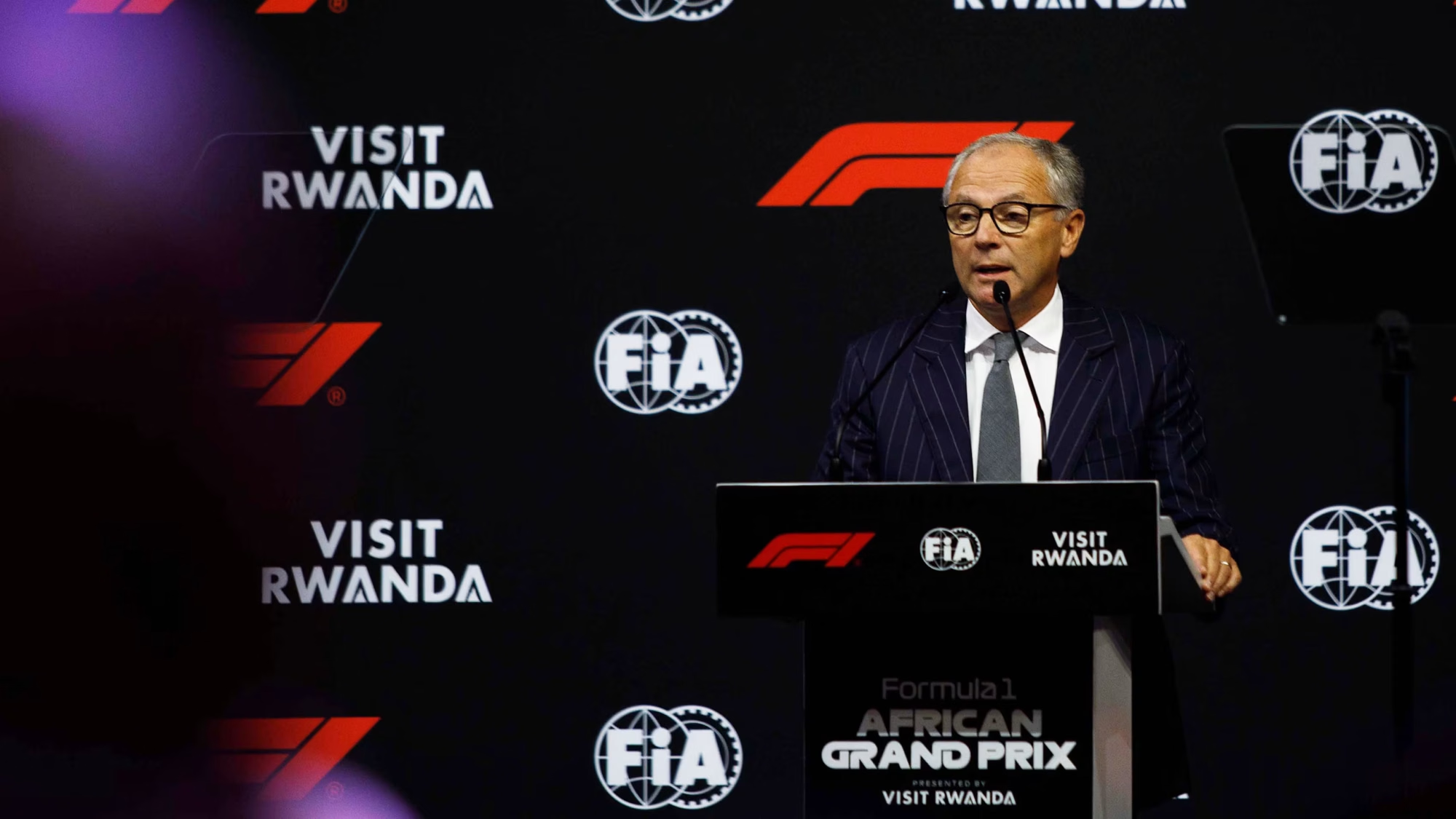
Formula 1 has announced that it will host a race on the African continent for the first time since 1993, with a Grand Prix in Rwanda. It is being positioned as the F1 Grand Prix of Africa, presented by Visit Rwanda. The contract is for 10 years and the first event is scheduled to take place in the early 2030s.
Leading voices in F1 from President and CEO Stefano Domenicali to seven-time World Champion Lewis Hamilton have been calling for the sport to access the African continent and a carefully developed plan from the Rwandan Government of Paul Kagame has met the benchmark for hosting a race. F1’s proprietary data indicate that around 11% of F1’s claimed 850m fans live in Africa.
Read on for Right Formula’s analysis of this exciting news.
What is the background to the announcement?
For F1 to be considered a true World Championship, it has long been felt that it requires a presence on every inhabited continent and Africa was the standout omission. However F1 is no stranger to racing in Africa; there have been 24 Grands Prix there in its history.
In the early decades of F1, Grands Prix in South Africa were a regular fixture on the calendar. The first race on the continent, however, was a one-off championship title decider in Morocco in 1958 on a road course in Casablanca.
The first races in South Africa were held in East London in 1962, 1963 and 1965. The series moved to a permanent circuit at Kyalami, near Johannesburg from 1967 to 1985. There were two further races there in 1992 and 1993. In 1979 Ferrari’s Jody Scheckter become the first and only World Champion from the African continent.
During the last decade of Bernie Ecclestone’s tenure as F1 CEO, the sport prioritised expansion into Asia. Since the takeover by Liberty Media in 2017, the focus has been on growth in the US market. Africa remained a key priority, particularly for Domenicali and a project in Morocco was considered, as well as a return to South Africa. But the Rwanda project has met the high bar that F1 sets for race hosting.
Former F1 driver and Paris-Dakar rally winner Jacky Ickx played a prominent early role in the development of the project. A significant milestone came in December 2024 when Rwanda hosted the FIA Prize Giving Gala, where Max Verstappen collected his fourth World Drivers’ Championship trophy.
Significantly the race’s title, the F1 Grand Prix of Africa, presented by Visit Rwanda, places the continent ahead of the host country, an unusual designation that highlights the significance of the event being a statement by the whole continent of Africa, not just Rwanda itself.
Visit Rwanda has been one of the most visible tourism sponsors in sport recently, with sponsorships of several football teams including Arsenal FC and Aston Villa in the English Premier League, Bayern Munich, Paris Saint Germain and Atlético de Madrid. The portfolio has expanded into the NFL and the NBA. The country also hosted the UCI Cycling World Championships last year.
What do we know about the venue for the Grand Prix in Rwanda?
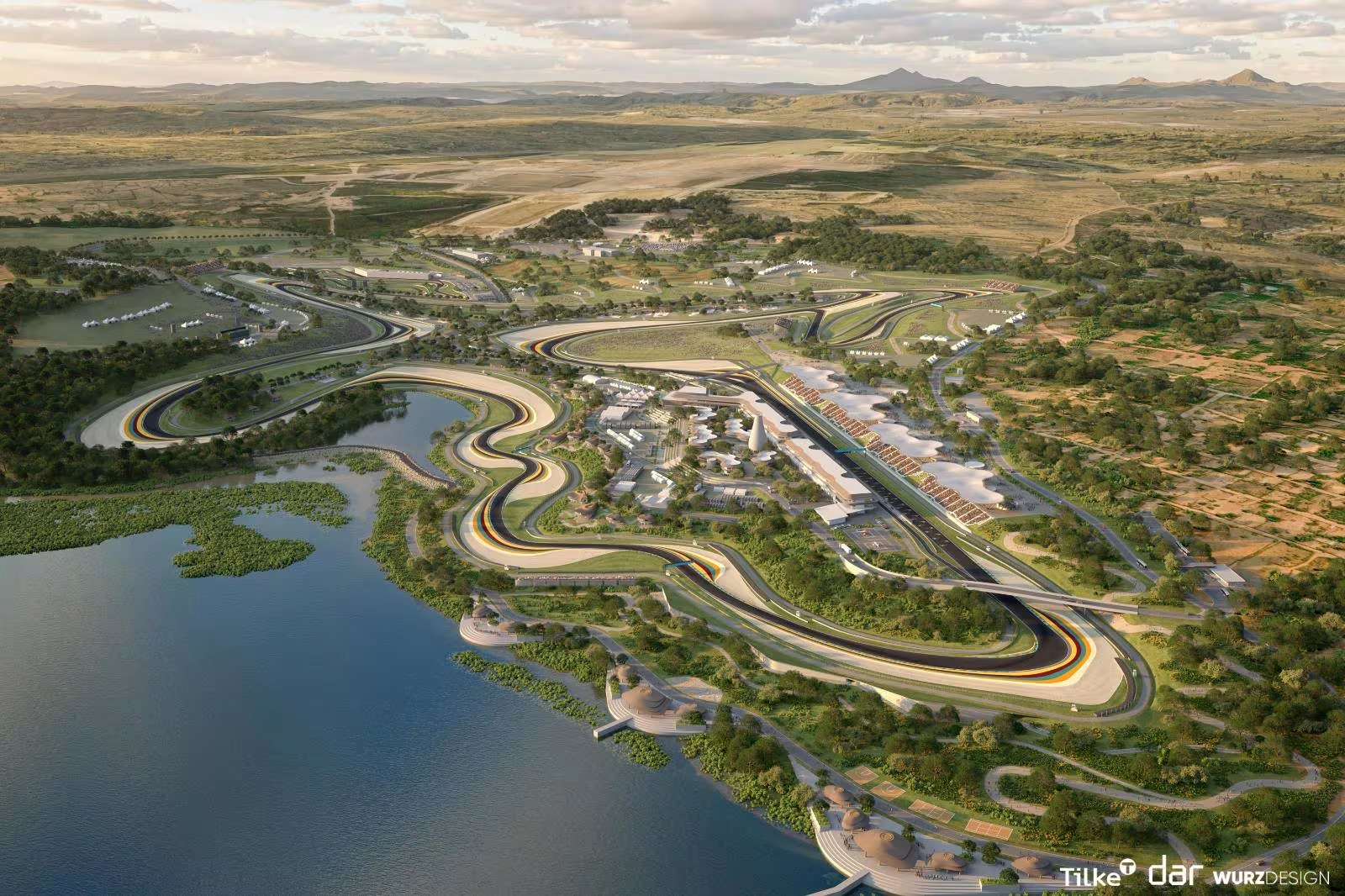
The project to build a Grand Prix circuit in Rwanda is linked to the Bugesera Airport project, near the capital Kigali. The new airport is set to become operational in 2028. It is designed to welcome up to 5 million tourists a year. The majority of the funding for the airport, race track and surrounding sports and tourism complex comes from Qatar.
It is part of a wider Qatari strategy around F1. Qatar Airways is an F1 Global Partner, the country hosts a Grand Prix at its Lusail Circuit and the Qatari Investment Authority holds a minority stake in Audi Revolut F1 team, whose sponsor roster includes Visit Qatar.
The track has been designed by former F1 driver and 24 Hours of Le Mans winner Alex Wurz, in partnership with Tilke Engineers and Architecs. This combination is also responsible for the new Qiddiya Circuit being built near Riyadh, which is due to become the new home of the Saudi Arabian GP in 2028. The new track features significant elevation changes, leaning into Rwanda’s distinctive contours.
Rwanda has a population of 14.6 million people, of whom 51.5% are female. F1 data shows that Africa has around 100 million F1 fans and 60% of the fans in sub-Saharan Africa are under 35, F1’s fastest growing audience demographic.
What is the business strategy behind this new event?
Rwanda’s President Paul Kagame has been a key player in driving this initiative. His view is that African athletes have played a prominent role across many global sports for decades and yet Africa has not seen the benefits on its own soil. The Grand Prix is a move to reverse that trend.
By calling the race the Grand Prix of Africa, presented by Visit Rwanda, it opens the whole continent up to participate and widens the funnel for businesses in the continent to engage. F1 Grands Prix are also an effective platform for driving inward investment to a country. F1 host venues look to engage with close to 400 companies that sponsor the series and its 11 teams as well as the wider international business community. F1 provides an effective platform to demonstrate an openness to do business and a forward-thinking mentality. Sustainability is also a key pillar in the vision of the Rwanda project.
The local economic impact of hosting a Grand Prix is measured in the hundreds of millions of dollars annually and there is also the recurring benefit of leveraging F1’s global audience footprint to showcase the country as a tourist destination on the TV world feed and in social media posts.
Key Strategic Takeaways
F1 return to Africa offers many commercial points which makes the new race exciting not just for those racing but brands that are in the sport. Expanding into Africa strengthens global brand credentials and engages a young sub-Saharan audience of over 100 million fans. This number will only be predicted to grow, with more African fans wishing to engage knowing a home race is on the horizon.
A unique African destination provides partners with an exclusive VIP hospitality experience to engage key clients beyond traditional European races, adding new experiences and a new destination for guests and clients alike to explore. It also opens up new stories to tell, with meaningful community messaging and content around a partnership having a new heritage behind it.
Rwanda’s purpose-built circuit near Bugesera International Airport is part of a wider sporting ambition, making the circuit become its own destination, a boost in tourism for the area and a new experience outside of the F1 race weekend.
The announcement of a race from 2030 is not the same as a fully confirmed event with all the commercial details settled. The venue, final event arrangements and the precise opportunities available to partners will determine how much value can ultimately be unlocked.